



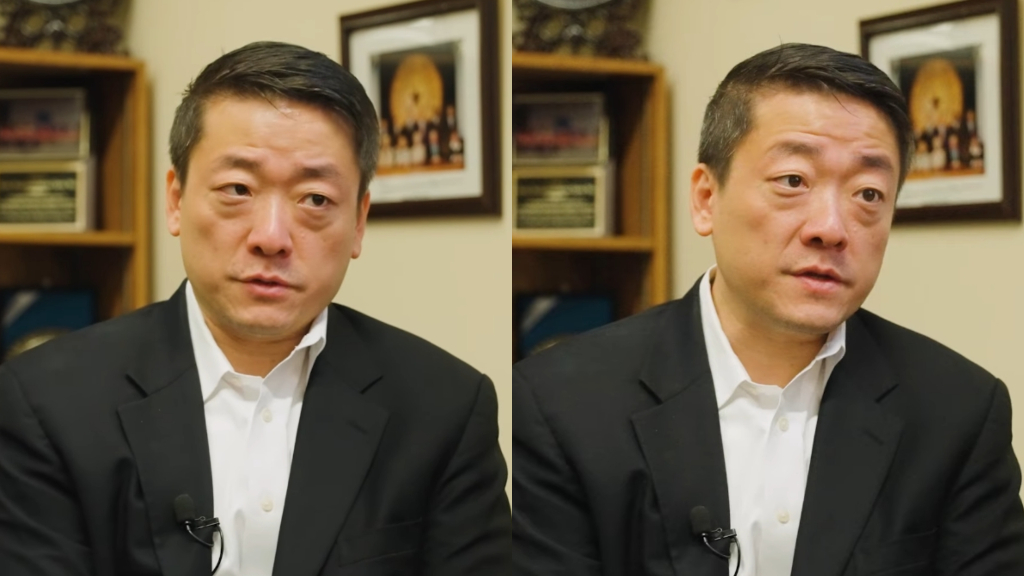
A December 2024 podcast appearance by Texas State Rep. Gene Wu (D-Houston) has ignited controversy after clips of his remarks about minority communities and their “shared oppressor” spread across social media.
Catch up: Wu, the minority leader in the Texas House of Representatives representing a majority-Latino Houston district, appeared on the “Define American” podcast with Jose Antonio Vargas on Dec. 31, 2024. In the interview, Wu said “the day the Latino, African American, Asian and other communities realize that they share the same oppressor is the day we start winning, because we are the majority in this country now.” He continued, “We have the ability to take over this country and to do what is needed for everyone and to make things fair.”
He also emphasized that Asian Americans’ civil rights “were paid for with Black blood,” crediting the civil rights movement for Asian American prosperity.
Conservative backlash: After X account End Wokeness posted the clip last weekend, LibsofTikTok amplified it, prompting swift responses from Texas Republicans. Sen. Ted Cruz wrote, “The Democrat party is built on bigotry,” while Atty. Gen. Ken Paxton called Wu “a radical racist.” Rep. Chip Roy called for his resignation. Meanwhile, GOP attorney general candidate Aaron Reitz proposed stripping Wu’s citizenship.
State Sen. Mayes Middleton, who is also running for attorney general, said Wu’s comments show “why only those born in America should be eligible to run for office,” targeting the fact that he immigrated from China as a child. Elon Musk also weighed in, writing, “Shame on him.”
Dig deeper: The controversy shows how political speech gets distorted without context. Wu clarified to the Houston Chronicle’s Evan Mintz that he was referring to Republicans, not white Americans, when he spoke of a “shared oppressor.” The 28-second viral clip omits his broader point from the 40-minute interview that power structures divide groups to maintain control. His “taking over” language sounded threatening to some, though in context he appears to have meant coalition-building to win elections.
Wu also told Mintz, “It is undeniable that Republicans have spent the past 50 years beating down communities,” citing policies harming “the poor, religious minorities, women, veterans, the disabled.” The irony is that some Republicans weaponized his immigrant background in their attacks, thereby reinforcing his argument about minority scapegoating.
The big picture: The backlash underscores why Wu’s solidarity message matters for Asian Americans. Last summer during redistricting, he faced xenophobic accusations alleging ties to the Chinese Communist Party, though his family suffered under that regime. Such treatment mirrors how other immigrants once faced identical suspicions before acceptance.
His argument about cross-racial coalition building draws on historical fact. The 1965 Immigration and Nationality Act, which enabled modern Asian immigration, passed only because the civil rights movement had already dismantled legal frameworks of racial exclusion.
This story is part of The Rebel Yellow Newsletter — a bold weekly newsletter from the creators of NextShark, reclaiming our stories and celebrating Asian American voices.
Subscribe free to join the movement. If you love what we’re building, consider becoming a paid member — your support helps us grow our team, investigate impactful stories, and uplift our community.

Join the conversation+