



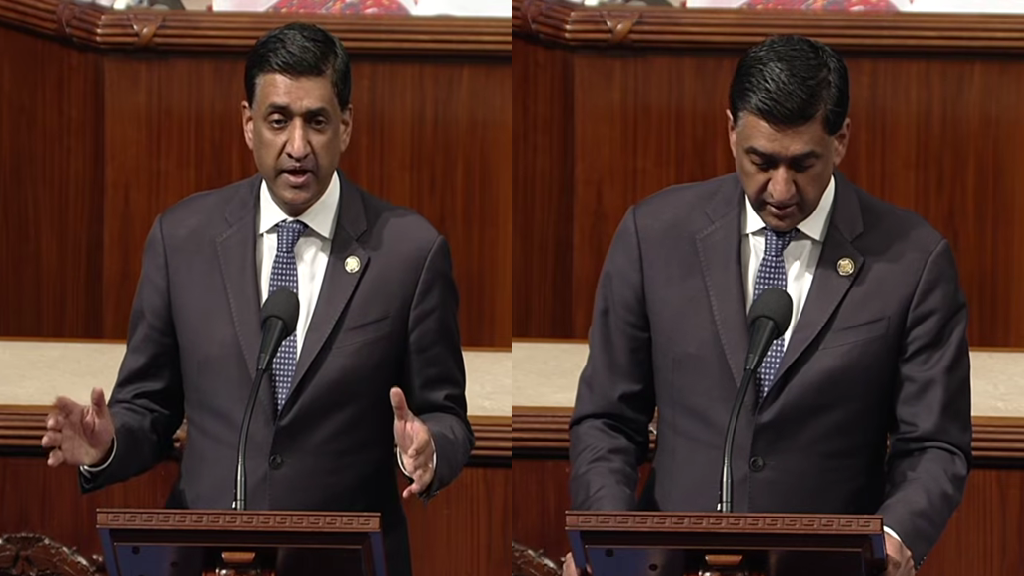
Rep. Ro Khanna (D-Calif.) used the protection of the Constitution’s Speech or Debate Clause on Tuesday to read into the congressional record the names of six “wealthy, powerful men” men he said were improperly redacted from the Jeffrey Epstein files. The disclosure came after he and Rep. Thomas Massie (R-Ky.) spent two hours reviewing unredacted materials at a Justice Department office Monday. Khanna said the names appeared in documents that should have been public under the Epstein Files Transparency Act, which mandated release of roughly 3 million pages with only narrow victim-related redactions.
Khanna accuses DOJ of violating transparency law
Speaking on the House floor, Khanna questioned why the identities were concealed in the publicly released version of the files. “Why did it take Thomas Massie and me going to the Justice Department to get these six men’s identities to become public? And if we found six men that they were hiding in two hours, imagine how many men they are covering up for in those 3 million files,” he said.
Khanna argued that the redactions originated within the FBI before the documents were transmitted for public release. “The Epstein Transparency Act requires them to unredact those FBI files, and yet the Justice Department said to me and to Congressman Massie, ‘We just uploaded whatever the FBI sent us.’ And guess what? The FBI sent scrubbed files,” he said. He added that survivor statements identifying “rich and powerful men” who visited Epstein’s properties were fully redacted in the public files.
While asserting that certain names appeared in investigative records in a way he considered significant, Khanna cautioned against equating inclusion with guilt. “None of this is designed to be a witch hunt. Just because someone may be in the files doesn’t mean that they’re guilty,” the lawmaker said in an earlier statement to journalists.
Six names read into the record
The six men Khanna identified were Leslie Wexner, Sultan Ahmed bin Sulayem, Salvatore Nuara, Zurab Mikeladze, Leonic Leonov and Nicola Caputo. Khanna did not present independent evidence of wrongdoing against any of them during his remarks.
A legal representative for Wexner said in a statement, “The Assistant U.S. Attorney told Mr. Wexner’s legal counsel in 2019 that Mr. Wexner was being viewed as source of information about Epstein and was not a target in any respect. Mr. Wexner cooperated fully by providing background information on Epstein and was never contacted again.” A representative for bin Sulayem did not immediately respond to requests for comment. The remaining four individuals could not be reached.
The Epstein Files Transparency Act, passed nearly unanimously in Congress and signed into law in November, permits redactions primarily to protect victims’ identities and certain personally identifiable information.
This story is part of The Rebel Yellow Newsletter — a bold weekly newsletter from the creators of NextShark, reclaiming our stories and celebrating Asian American voices.
Subscribe free to join the movement. If you love what we’re building, consider becoming a paid member — your support helps us grow our team, investigate impactful stories, and uplift our community.

Join the conversation+