



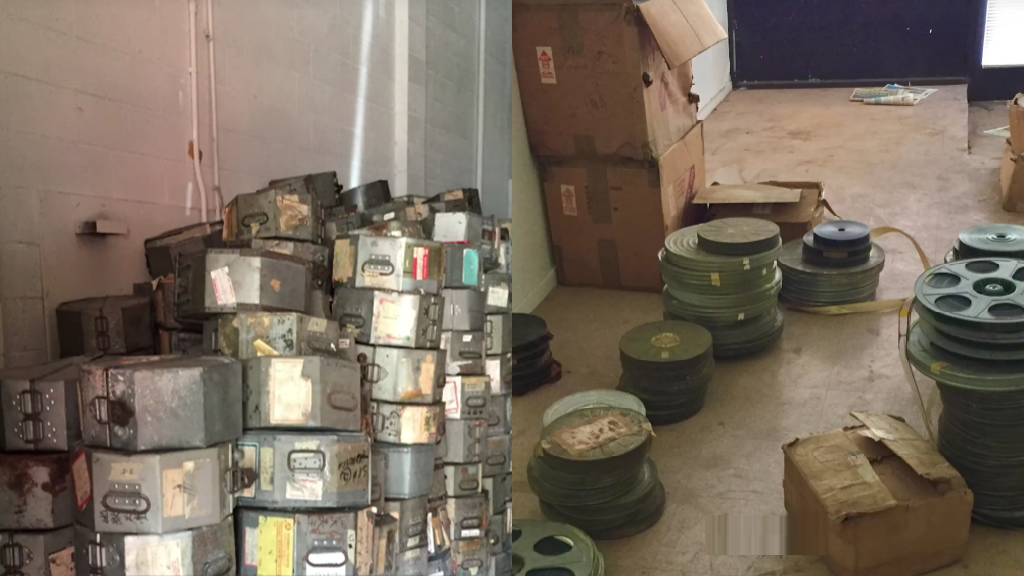
Nearly 600 original 35 mm Chinese-language film prints recovered from Los Angeles’ former Sing Lee Theatre are now returning to public exhibition through the UCLA Film & Television Archive. The films, produced between 1960 and 1988 and originally screened in Chinatown, include works from major Hong Kong studios such as Shaw Brothers and Cathay.
The free series “Echoes From Spring Street,” which opened Jan. 16 at the Billy Wilder Theater in Westwood, continues through March 22, presenting curated selections from the rescued collection.
From opera stage to Chinatown cinema: Opened in 1962 at 649 N. Spring St. by Hong Kong immigrant Tony Quon Lew, the Sing Lee Theatre, also known as the King Hing Theatre, began as a venue for live Cantonese opera featuring visiting performers from Hong Kong. After Lew’s death in 1968, his wife Margaret Lew transitioned the theater fully into film exhibition. By the 1980s, the venue had joined Gordon’s Film Inc., a North American distribution network that supplied Hong Kong films to partner theaters in cities including New York, Boston, Toronto and San Francisco.
Rescue and preservation: After the theater ceased operations in the early 2000s, hundreds of film cans remained stored inside the building. In 2016, the property owner contacted the UCLA Film & Television Archive about the materials, leading to the transfer of nearly 600 unique 35 mm prints into the archive’s collection. Staff inspected, cataloged and stabilized the films, preserving commercial studio releases that once circulated widely among overseas Chinese audiences during the peak of Hong Kong’s studio era.
Genres across three decades: The Sing Lee’s programming includes 1960s Cantonese opera adaptations and historical epics, 1970s martial arts films and Taiwanese wenyi melodramas, and 1980s Golden Age commercial features and horror titles. Studios represented in the preserved prints include Shaw Brothers, Cathay, D&B and Cinema City, alongside works by women filmmakers active during the period.
This story is part of The Rebel Yellow Newsletter — a bold weekly newsletter from the creators of NextShark, reclaiming our stories and celebrating Asian American voices.
Subscribe free to join the movement. If you love what we’re building, consider becoming a paid member — your support helps us grow our team, investigate impactful stories, and uplift our community.

Join the conversation+