



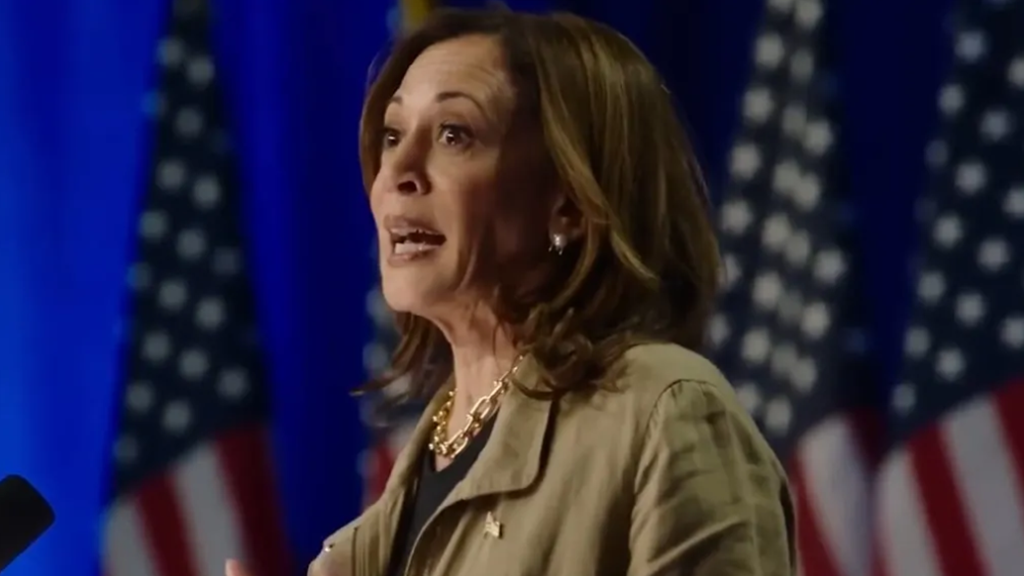
Kamala Harris has yet to say whether she will seek the White House again, but Democratic voters are already putting her at the front of the party’s emerging 2028 field. Nearly two years after losing the 2024 presidential election to Republican Donald Trump, the former vice president has led recent national surveys testing potential Democratic contenders.
Harris begins the cycle ahead of Newsom
A recent DailyMail.com/JL Partners survey found Harris leading the prospective Democratic field with 29% support among registered Democratic voters, 14 percentage points ahead of California Gov. Gavin Newsom at 15%. Former Transportation Secretary Pete Buttigieg received 11%, followed by Rep. Alexandria Ocasio-Cortez at 6% and Sen. Mark Kelly at 5%. JL Partners surveyed 1,059 registered voters nationwide for the broader poll, but the published report did not disclose the size or margin of error of the Democratic subgroup.
The findings align with several other recent national surveys. Morning Consult found Harris leading Democratic and Democratic-leaning voters 34% to 11% over Newsom. McLaughlin & Associates measured the race at 26% to 16%, while Echelon Insights put Harris ahead 20% to 14%. Although the size of the lead varies by pollster, each survey has placed Harris ahead of Newsom, making her the most consistent leader of the early Democratic field.
The 107-day campaign
Harris became the Democratic nominee after President Joe Biden ended his reelection campaign on July 21, 2024, leaving her with 107 days to run against Trump. Trump defeated her 312-226 in the Electoral College, won the popular vote and carried all seven major battleground states.
AP VoteCast found that Harris retained large majorities of Black voters and won more than half of Hispanic voters, but both groups moved toward Trump compared with 2020. Trump also gained among younger voters and Latino men, while economic concerns and immigration ranked among the issues that drove his support.
Harris later acknowledged one of her campaign’s most damaging moments, writing in her memoir that her answer on “The View” that she could not name anything she would have done differently from Biden gave Trump’s campaign a political gift. Her book, “107 Days,” also criticized the decision to leave Biden’s reelection choice largely to him and first lady Jill Biden. “Was it grace, or was it recklessness? In retrospect, I think it was recklessness,” Harris wrote, while continuing to defend Biden’s ability to serve as president.
Harris declined to run for California governor in 2026, keeping open the possibility of another presidential bid. During a conversation with the Rev. Al Sharpton at the National Action Network convention in New York City in April, she responded to a question about whether she plans to run in 2028 by saying, “Listen, I might. I’m thinking about it.” Harris pointed to her four years as vice president as preparation for another campaign, adding, “I know what the job is, and I know what it requires,” and said her travels around the country had reinforced her belief that “the status quo is not working, and hasn’t been working for a lot of people for a long time.”
Will this time be different?
While early polls show Democratic voters have not discarded Harris after her 2024 defeat, they do not establish whether she can hold that support through a contested primary or rebuild the coalition needed to win a general election. Still, a second presidential campaign would look little like Harris’ first. Instead of inheriting the Democratic nomination in the closing months of the race, she would have the opportunity to compete from the outset, test her message in debates, build an organization in early voting states and assemble her own campaign before facing Republican voters in a general election.
She would also enter a race without Donald Trump at the top of the Republican ticket, removing the opponent who defeated her in 2024. At the same time, Harris would no longer campaign as vice president, giving her greater latitude to define herself apart from an administration that many voters ultimately rejected. Those changes would give her opportunities she never had four years ago, but they would not erase the political baggage that comes with being the Democratic Party’s most recent presidential nominee.
Harris would still have to rebuild support among demographic groups that shifted toward Republicans in 2024 and persuade Democratic voters, donors and elected officials that a second campaign could produce a different result. Early polling suggests many Democrats remain open to Harris, but converting that support into both the nomination and the presidency would require a far more demanding campaign.
This story is part of The Rebel Yellow Newsletter — a bold newsletter from the creators of NextShark, reclaiming our stories and celebrating Asian American voices.
Subscribe free to join the movement. If you love what we’re building, consider becoming a paid member — your support helps us grow our team, investigate impactful stories, and uplift our community.

Join the conversation+