



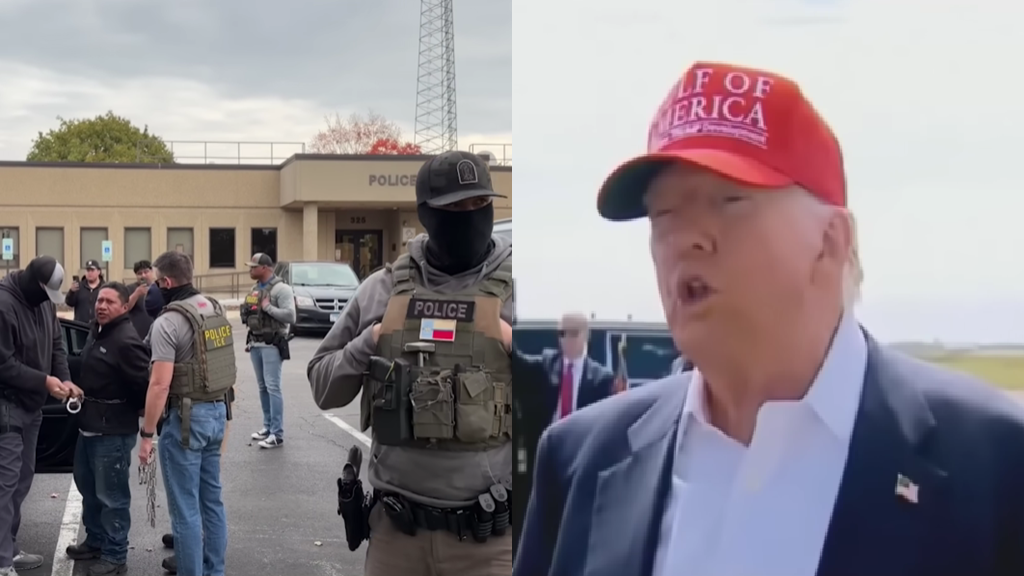
Federal records show U.S. Immigration and Customs Enforcement expanding its enforcement toolkit with more than $300 million earmarked across planned and active contracts for surveillance technology under President Donald Trump’s administration. The spending covers social media monitoring, facial recognition, license plate readers and data services commonly used to locate where people live and work. The effort relies heavily on private contractors to provide both surveillance platforms and analysts.
Contracts consolidate surveillance capabilities
Federal procurement records reported in October by WIRED show ICE pursuing multi-year agreements that combine public online activity, government records and commercially sourced data into searchable profiles used to support immigration investigations. Many of the agreements are structured to expand through task orders, allowing the agency to scale surveillance capacity without issuing new contracts each time.
The records also show ICE contracting private vendors to provide surveillance software, access to commercial databases and analysts who process information for enforcement leads. Several of these capabilities feed into large vendor-built analytics systems, including platforms developed by Palantir Technologies, the data analytics firm co-founded by Peter Thiel, a prominent conservative political donor. Civil liberties groups say this contracting model can complicate oversight, since key analytical steps occur inside vendor-run systems rather than within the agency.
Social media, biometrics and location data
Procurement documents and draft planning materials show the agency intends to hire nearly 30 private contractors to monitor publicly available content on platforms such as Facebook, Instagram, TikTok and YouTube. The analysts would be assigned to ICE targeting centers in Vermont and Southern California, operating on rotating shifts to provide near-continuous coverage.
Rather than conducting limited, case-by-case searches, the model emphasizes ongoing monitoring, with contractors expected to convert posts, photos and online connections into enforcement leads on tight timelines. The shift reflects a move toward continuous surveillance of online activity supported by subscription-based monitoring tools and commercial databases.
Implications for Asian American families
As enforcement relies more heavily on aggregated data rather than in-person encounters, advocates say Asian American immigrant communities may receive little notice before enforcement actions occur. Investigations can begin through records and digital analysis alone, affecting households with shared addresses, vehicles or family-run businesses.
The effects of expanded digital scrutiny are already visible beyond enforcement operations. In recent weeks, Indian H-1B and H-4 visa holders traveling for routine visa stamping have faced widespread interview cancellations after U.S. officials expanded online presence screening, leaving many stranded abroad for months. Advocates say these developments underscore how routine online activity and administrative data can increasingly shape immigration outcomes.
Subscribe free to join the movement. If you love what we’re building, consider becoming a paid member — your support helps us grow our team, investigate impactful stories, and uplift our community.

Join the conversation+