



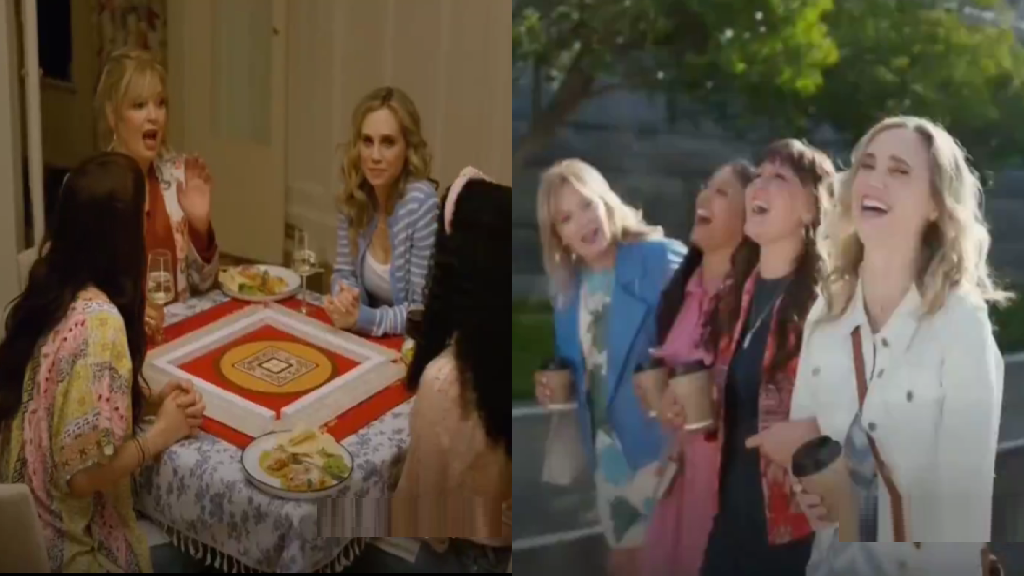
Hallmark Channel is facing criticism over its upcoming film “All’s Fair in Love and Mahjong,” which features a predominantly white cast despite centering on a Chinese cultural tradition. The movie, set to premiere May 9 during Asian American and Pacific Islander Heritage Month, has drawn objections from Asian American creators and viewers online. Critics point to casting choices that they say sideline Asian representation in a story built around Chinese culture.
Casting and online backlash
The film stars Fiona Gubelmann, Paul Campbell, Yan-Kay Crystal Lowe, Tamera Mowry-Housley and Melissa Peterman, with Lowe identified as the only principal cast member of Asian descent.
Users responding to Hallmark’s promotional posts on Instagram and Threads described the project as “whitewashed” and questioned why a story centered on Mahjong did not feature more Asian actors in leading roles. Philip Wang wrote, “Collective ancestral sigh…,” while writer Kat Lieu posted, “Ah yes, nothing says Happy AAPI Month like appropriating Asian culture.”
Some users questioned whether the cast could read the Chinese characters on Mahjong tiles or whether the game was being used as a visual element without cultural context. Others asked whether Asian writers, consultants or businesses were involved in the production, while additional criticism targeted the use of stylized, non-traditional Mahjong tiles shown in promotional materials.
Film details and response
Hallmark’s synopsis describes a school nurse who, after a personal setback, begins teaching Mahjong and forms a new social circle through regular games. Promotional stills show the group singing karaoke, having drinks at a bar and posing together outdoors.
Mahjong originated in China in the 19th century and is played with 144 tiles marked by Chinese characters and symbols representing numbers, currency and cultural references. The game has long been associated with social gatherings and intergenerational bonding within Chinese and Chinese American communities.
In a statement to Entertainment Weekly, a Hallmark spokesperson said the film “honors the heritage of mahjong by recognizing the game’s Chinese origin and its unique ability to connect cultures, generations, and communities.”
This story is part of The Rebel Yellow Newsletter — a bold weekly newsletter from the creators of NextShark, reclaiming our stories and celebrating Asian American voices.
Subscribe free to join the movement. If you love what we’re building, consider becoming a paid member — your support helps us grow our team, investigate impactful stories, and uplift our community.

Join the conversation+